
Menu
What Do You Actually Learn in B.Sc. Respiratory Care Technology?
When you first hear B.Sc. Respiratory Care Technology, you might think of lungs, oxygen masks, ventilators, and intensive care. While these are important parts of the field, the course is much broader. A B.Sc. Respiratory Care Technology course combines medical science, practical training, respiratory care skills, healthcare technology, and clinical experience. It prepares students to understand respiratory conditions and support patients as part of a professional healthcare team.
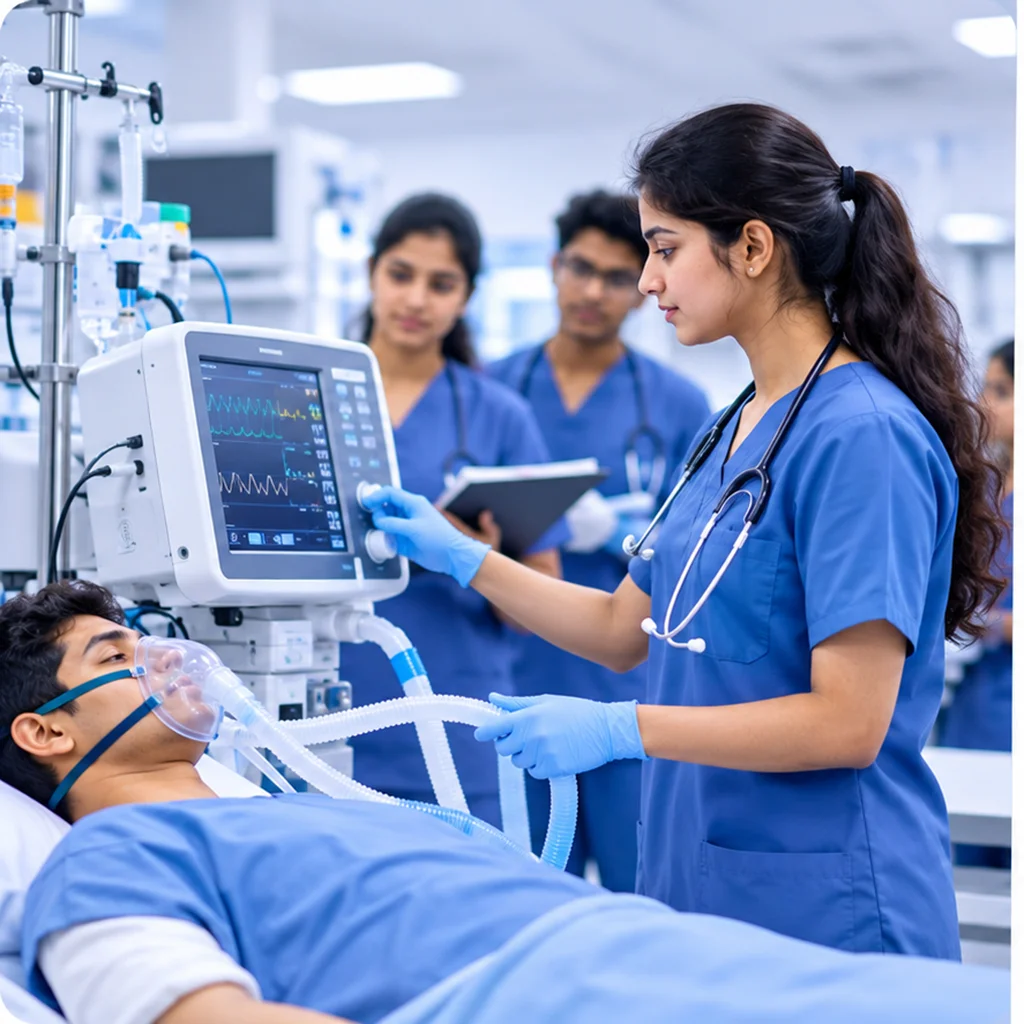
The journey begins with understanding the human respiratory system. Students study subjects such as anatomy and physiology to learn how the lungs, heart, blood, and other organs work together. This foundation is essential for anyone planning a career in respiratory care technology. Instead of simply memorising information, students learn how the body functions normally and what happens when the respiratory system is affected by illness or injury.
Students also learn about different respiratory diseases and conditions. Asthma, chronic obstructive pulmonary disease (COPD), pneumonia, respiratory infections, and respiratory failure are some of the conditions students may encounter during their education. Understanding these conditions helps students connect classroom concepts with real clinical situations. This knowledge is an important part of becoming a skilled respiratory care technologist.
Another major area of learning is oxygen therapy and respiratory support. Students are introduced to different oxygen-delivery devices and methods of respiratory support. They learn why a patient may require respiratory assistance and how their condition can be monitored. This makes respiratory care technology a field that combines medical knowledge with hands-on technical skills. The focus is not simply on providing oxygen but on understanding the patient’s needs and supporting safe, appropriate care under clinical supervision.
Mechanical ventilation is another important area of respiratory care education. Ventilators can provide breathing support to patients who are unable to breathe adequately on their own. As part of their training, students learn the basic principles of mechanical ventilation, ventilator settings, respiratory monitoring, and patient response. Learning about ventilators also helps students understand how modern critical care technology supports patients in intensive care environments.
A B.Sc. Respiratory Care Technology syllabus may also include respiratory assessment and diagnostic techniques. Students learn how healthcare professionals assess a patient’s breathing and monitor changes in respiratory status. Depending on the institution and curriculum, students may study respiratory rate, oxygen saturation, lung sounds, arterial blood gas analysis, and pulmonary function testing. These skills help students understand how clinical information is collected and used as part of patient care.
One of the most important aspects of a B.Sc. Respiratory Care Technology degree is practical and clinical training. Healthcare cannot be fully understood through textbooks alone. Laboratory sessions, demonstrations, simulations, and supervised clinical exposure allow students to apply their knowledge in practical situations. Depending on the college and curriculum, students may gain clinical exposure to ICUs, emergency departments, wards, pulmonary care units, and other respiratory care settings.
Clinical education also helps students understand what it means to work in a real healthcare environment. Respiratory care professionals often work alongside doctors, nurses, physiotherapists, and other healthcare professionals. Therefore, students develop important clinical communication, teamwork, patient-care, and professional skills. These qualities can be just as important as technical knowledge when building a successful career in healthcare.
Another important lesson is understanding the patient behind the equipment. Respiratory care involves advanced technology, but healthcare is ultimately about people. A patient using an oxygen device or ventilator may feel anxious or vulnerable. Students learn the importance of communicating respectfully, providing reassurance, and maintaining a patient-centred approach while carrying out their professional responsibilities.
For students interested in B.Sc. Respiratory Care Technology admission, understanding the learning journey can help them decide whether this healthcare course matches their interests and career goals. Students who enjoy biology, healthcare technology, clinical environments, patient care, and working as part of a medical team may find respiratory care technology an interesting field to explore.
In simple terms, the B.Sc. Respiratory Care Technology course takes students through a journey of understanding the human body, learning about respiratory diseases, developing respiratory care skills, working with healthcare technology, and gaining clinical experience. Each stage helps students become more confident and prepared for professional practice.
Ultimately, B.Sc. Respiratory Care Technology is not just about learning how to operate respiratory equipment. It is about understanding the science of breathing, developing practical and clinical skills, working with healthcare professionals, and supporting patients when breathing becomes difficult. For students looking for a specialised allied health science course and a meaningful career in respiratory care, it offers an opportunity to combine science, technology, and patient care.
You don’t just learn about every breath—you learn why every breath matters.
About Us
Christian College, Bangalore is one of the top colleges in Bangalore
Contact us
- Mob: +91 9845 044 494
- +91 6364 71 5544
- +91 6364 81 5544
- admission@christiancollegebangalore.org
- Web:www.christiancollegebangalore.org
Copyright © 2026 All rights reserved.